







11 min read · November 1, 2026
How to Build a Code Enforcement Violation List That Turns Into Contracts
 By Esteban AndradeFounder of Hesel Media
Every city in America keeps a running list of properties whose owners are losing a fight with the house. Inspectors write it down, give it a case number and, in a growing number of cities, publish it for free. Most investors never pull it, and the ones who do mail everyone on it. Here is how to build a code enforcement violation list that turns into contracts.
Key points
- A code enforcement violation list is a set of properties where a city or county inspector has cited the owner for breaking a housing, building or property maintenance code, pulled from public records for investor outreach.
- Many cities publish violations free on open-data portals, often refreshed daily. We verified seven, from New York City to Fort Worth, as of November 2026.
- Most violation datasets don't include the owner's name. You add it by joining the parcel or address to county assessor records.
- Work severe, repeat and absentee-owned violations first. Weeds and trash cans are noise; unsafe-building notices are signal.
What is a code enforcement violation list?
A code enforcement violation list is a record of properties cited by a local government for conditions that break its codes, such as unsafe structures, work without permits, unsanitary conditions or overgrown lots, with the address, violation type, case status and dates. For an investor, it is a list of owners who have a problem the city is already pressuring them to fix.
Know the three record types before you pull anything:
- Complaint: someone called 311 or filed online. Nothing is confirmed yet.
- Case: the city opened a file and sent an inspector.
- Violation or notice of violation: the inspector confirmed the condition and cited the owner.
Work violations and open cases, not raw complaints. Fort Worth's portal makes the point for you: its code violations table covers actual cases and excludes complaints.
Why code violations are worth pulling
Code violations matter because they put a deadline and a cost on a property owner who may already be stretched, and that combination creates sellers. Our seller research lists a code violation among the triggers for damaged, as-is sellers and for families dealing with a cluttered or hoarder property. The city is doing your qualification for you: it has already confirmed the house needs work.
The catch is that everyone with a data subscription can find the same list. The edge is not the data. It is filtering better, adding the owner faster and reaching them with a better message than the fifth postcard in their mailbox.
Where to get code violation data: 7 verified city portals
The fastest source is a city open-data portal, where violation records can be downloaded as a spreadsheet or pulled through an API at no cost. These seven were live when we checked them, as of November 2026:
| City | Dataset | Refresh and last update seen | Owner name in the data? | Filter worth using |
|---|---|---|---|---|
| New York City | Housing Maintenance Code Violations (HPD) | Daily; rows updated October 30, 2026 | No; join to HPD's registration file | Class C (most serious), open status, rent-impairing |
| Chicago | Building Violations, Department of Buildings, 2006 to present | Daily; rows updated October 28, 2026 | No | Open violation status, repeat addresses |
| New Orleans | Code Enforcement All Violations | Rows updated October 31, 2026 | No | Violation type and code section, repeat case numbers |
| Cincinnati | Code Enforcement (vehicles, building, demolition, property, zoning) | Daily; rows updated October 31, 2026 | No | Building and demolition work types, status |
| Austin | Austin Code Complaint Cases | Daily; rows updated October 31, 2026 | No; includes a parcel ID for the owner join | Repeat-offender flag, status, case type |
| San Francisco | Notices of Violation, Department of Building Inspection | Daily; rows updated November 1, 2026 | No; block and lot for the owner join | Unsafe building, work without permit, expired permit |
| Fort Worth | CFW Code Violations Table, Code Compliance Department | Update date not shown on the page | Not stated | Cases only, complaints excluded |
As of November 2026, checked on each city's portal. Links are in the Sources section. Field names change, so confirm the columns before you build a filter. San Francisco's portal also notes it moved from data.sfgov.org to data.sf.gov, and old links must be updated by November 20, 2026.
Counties run their own tools too. Orange County, Florida offers a title violation search built "to assist title companies that would like to know if code violation exists prior to a sale or closing," with a warning that the data "may not be 100% accurate."
No portal? Use a public records request
If your city doesn't publish violations, ask for them under your state's public records law, and request a bulk export rather than individual files. Ask for the last 12 months of code enforcement cases with address, parcel number, violation type, status, opened date and closed date, in spreadsheet format.
Deadlines and fees vary by state. In Texas, for example, the Attorney General says a governmental body must "promptly" produce public information, must tell you the release date if it needs more than ten business days, and can face an informal complaint if it fails to respond. Make the request once, then ask to receive the same export monthly.
How to work a code violation list, step by step
A code violation list turns into contracts when you filter it hard, add the owner, score it and reach the best records first with a message that offers a way out, not a reminder of the problem.
- Pull 12 months. Download the dataset or request the export. Keep residential property only.
- Keep violations, drop noise. Remove raw complaints and low-severity items such as weeds, trash and parked vehicles unless they repeat.
- Tier by severity. High: unsafe building, condemnation, demolition, NYC Class C. Medium: structural, exterior, work without a permit, expired permits. Low: lawn, debris, signs.
- Flag repeats. The same address with several cases in a year is a stronger signal than one big citation. Austin even flags repeat offenders in its data.
- Add the owner. Join the parcel ID, block and lot, or address to county assessor records. In New York, the dataset description points to HPD's registration file for owner details.
- Mark absentee owners. A mailing address different from the property address usually means a landlord or an heir, which overlaps with tired landlords.
- Stack other signals. Tax delinquency, vacancy and long ownership on top of a violation move a record to the front of the line.
- Dedupe and scrub. Remove owners already in your CRM, and scrub phone numbers against the Do Not Call Registry before any cold calls.
- Track by violation type. After 90 days, compare which tiers produced appointments and contracts, and cut the rest.
What to say to an owner with a code violation
Lead with the outcome the owner wants, an as-is sale on their timeline, and never with the violation itself. A letter that opens with "We saw your house was cited" reads like surveillance. A letter that says "We buy houses that need work, including open city cases" reads like a solution.
- Name the conditions they think disqualify them. Hesel's rule for as-is seller pages is to say plainly that fire damage, mold, foundation problems and code violations are fine. The same works in a letter or on a call.
- Mail first for owner-occupants. Many are older owners or families in a hard spot. A respectful letter beats a cold call, and our wholesale letter templates are a starting point.
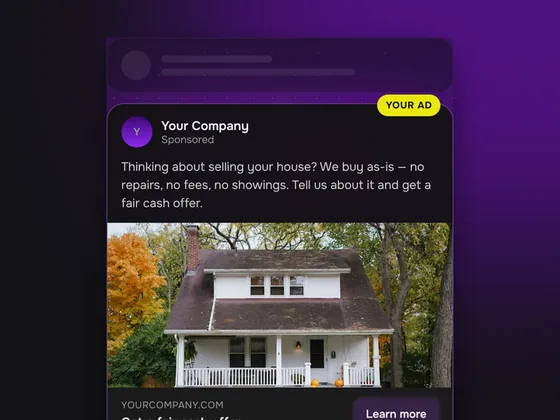
- Keep ads in the third person. Meta's policy says ads "must not contain content that asserts or implies personal attributes," including vulnerable financial status. "Homes with open code cases, bought as-is" passes. "Is the city fining you?" does not.
- Respect calling rules. The FTC says sellers who must use the Do Not Call Registry have to sync their lists "at least every 31 days."
Due diligence before you sign: violations, fines and liens
An open code case doesn't disappear at closing, so price it in and check title for related liens before you sign. Three checks keep a good list from producing a bad contract:
- Confirm the case status with the city. Open-data portals lag and can be wrong. Get the current status, the compliance deadline and any re-inspection dates.
- Search for liens. Orange County, Florida tells users to search the county's Official Records for recorded liens and assessments rather than relying on its violation search. Your title company should run the same search in your county.
- Get the disclosure in writing. The same Orange County page notes that a Florida owner's failure to disclose violations in writing "creates a rebuttable presumption of fraud" under Chapter 162.06. Ask every seller for open cases in writing, in every state.
Then price it: repair cost to cure, any fines you agree to pay, the holding time while you cure, and the buyer discount for a house with an open city file. Those numbers belong in your offer, not in a surprise at the title desk.
How Hesel turns code-violation sellers into inbound inquiries
Lists find owners who might sell. Hesel's approach is to make the owner with a code problem find you, so the conversation starts with intent instead of a cold knock.
- A dedicated motivation. A creative framework Hesel uses maps 15 seller motivations, and code violations is one of them, with its own ads instead of a generic "we buy houses" message.
- Pain-point copy. One of Hesel's named ad copy families speaks directly to liens, code violations, occupants and leaving contents behind.
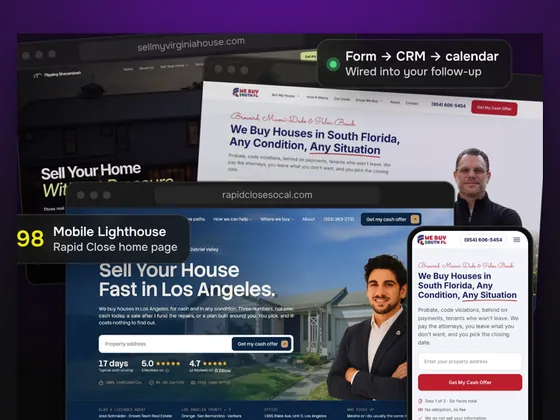
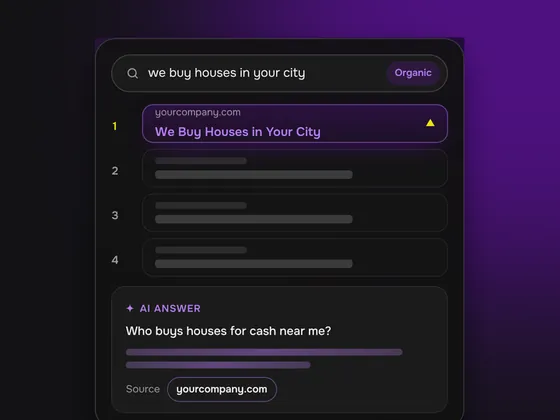
- Situation pages. On client websites, Hesel's SEO team builds as-is pages that name code violations as something the buyer accepts, with an authority link out and a clear "we're not attorneys" line.
- Condition on the first call. The ISA checklist covers repairs needed, roof and HVAC age and occupancy, so a code issue surfaces before the acquisitions appointment, not at the walkthrough.
Want owners with code problems calling you first?
A public list puts you in line with every investor who can download a spreadsheet. An inbound campaign puts you in front of the owner the week they decide to sell.
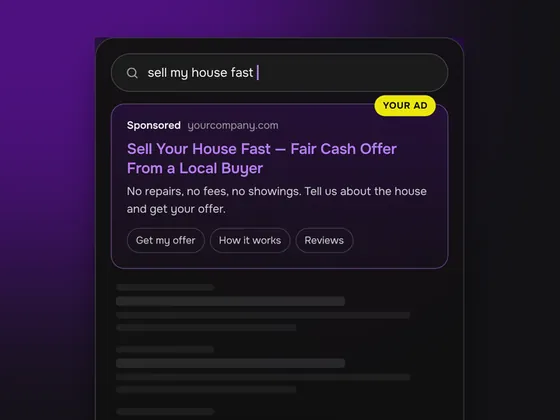
Hesel runs motivated seller campaigns on Meta and Google, with ISA follow-up and appointment setting that books as-is sellers with your acquisitions team after condition, timeline and price are on the record. For context on which seller situations to target, see our breakdown of types of motivated sellers.
Find out if your market fits: book a market viability call. If the math doesn't work, we will tell you on the call.
Frequently asked questions
How do I get a list of properties with code violations?
To get a list of properties with code violations, check your city's open-data portal for a code enforcement or building violations dataset and download it. If none exists, file a public records request for 12 months of code cases with address, parcel, violation type, status and dates, in spreadsheet format, and ask for monthly updates.
Are code violation records public?
Code violation records are generally public records held by the city or county that issued them. Many cities, including New York City, Chicago, Austin and San Francisco, publish them on open-data portals. Where they aren't published, you can usually request them under your state's public records law, though fees and deadlines vary.
Do code violation lists include the owner's name?
Code violation lists usually don't include the owner's name. Of the six city datasets whose columns we could inspect in November 2026, none listed the owner in the violation records. You add owners by joining the parcel number, block and lot, or address to county assessor or tax records, then skip tracing for contact details.
Which code violations signal a motivated seller?
The code violations that signal a motivated seller are severe or repeated ones: unsafe-building notices, condemnation or demolition orders, serious housing violations such as New York's Class C, work without permits and repeat cases at one address. Weeds, trash and parked cars alone rarely mean the owner wants to sell.
Can I buy a house with open code violations?
You can buy a house with open code violations, but the violations and any related fines or liens usually stay with the property. Confirm the case status with the city, have your title company search for recorded liens, get the seller's written disclosure, and price the cost to cure into your offer.
How often are code violation datasets updated?
Code violation datasets are often updated daily. New York City, Chicago, Cincinnati, Austin and San Francisco all list a daily refresh on their portals as of November 2026, while some cities don't show an update schedule. Pull weekly or monthly and dedupe against your CRM so you only work new records.
Is it legal to contact owners from a code violation list?
Contacting owners from a code violation list is regulated like any outreach. The FTC requires syncing with the Do Not Call Registry at least every 31 days if you cold call. Follow your state's calling and texting laws, keep ads free of personal-attribute claims, stop when an owner asks, and confirm your plan with an attorney.
Sources
- NYC Open Data: Housing Maintenance Code Violations (HPD)
- City of Chicago Data Portal: Building Violations
- Data.NOLA.gov: Code Enforcement All Violations
- City of Cincinnati Open Data: Code Enforcement
- City of Austin Open Data: Austin Code Complaint Cases
- DataSF: Notices of Violation, Department of Building Inspection
- Fort Worth Open Data: CFW Code Violations Table
- Orange County, Florida: code enforcement title violation search
- Texas Attorney General: overview of the Public Information Act
- FTC: Q&A for telemarketers and sellers about the Do Not Call provisions
- Meta Transparency Center: personal attributes ad policy