



12 min read · November 1, 2026
How to Get Real Estate Deals Without Cold Calling: Six Inbound Channels Compared
 By Esteban AndradeFounder of Hesel Media
Your callers work the same list every other investor in your county bought. The seller who picks up has heard the pitch four times this week, and your number now shows "spam likely." There is a better trade: let the seller raise a hand first, then answer faster than anyone else.
Key points
- Getting real estate deals without cold calling means running inbound channels (ads, search, video, mail, referrals) where the homeowner contacts you first, then converting those inquiries with fast follow-up.
- Judge every channel on cost per signed contract and time to first contract, not on cost per inquiry.
- Google PPC catches sellers already searching and contracts fastest. Meta reaches sellers before they search and gives volume. SEO compounds but takes months.
- Inbound only beats dialing if someone calls the seller back in minutes, nights and weekends included.
- Pick your first channel by budget, follow-up capacity and how long you can wait for the first check.
Why investors are moving off cold calling
Investors are moving off cold calling because the lists are shared, the phones are flagged, and the math gets worse every year, while inbound sellers arrive already wanting to talk. Cold calling still works for some teams with clean data, compliance and strong callers. It is just no longer the only door.
Operators tell us the same story on sales calls: everyone is calling off the same data, and their own outbound numbers get flagged as spam.
One land and house wholesaler put it plainly: "We're all pulling data from the same exact place... people are getting pummeled." Another, who owns rentals himself, said the cold calls he gets "almost always say spam likely."
The ratio was never pretty. In a Baylor University Keller Center study run with Keller Williams, 50 agents made 6,264 cold calls over two weeks in late 2011. Only 28% were answered, and they set 19 appointments, about one per 330 calls. That was agents calling homeowners, not investors, but the shape holds.
Compliance adds cost. The FTC's Telemarketing Sales Rule guidance bars covered sellers from calling numbers on the National Do Not Call Registry and treats calls before 8 a.m. or after 9 p.m. as abusive. Scrubbing lists and policing texts is real work.
So if you searched how to get real estate leads without cold calling, the honest answer is: buy or earn inbound seller inquiries, then run them like a sales team.
Six inbound channels compared
The six inbound channels that produce seller contracts for investors are Meta ads, Google PPC, SEO, YouTube, direct mail and referrals, and they differ most on seller intent and time to first contract. We do not publish a typical cost per contract by channel, because it swings with your market, offer and follow-up. Use the operator math below to compute yours.
| Channel | How the seller finds you | Intent | Time to first contract | Cost per contract (as of Nov 2026) | Watch out for |
|---|---|---|---|---|---|
| Meta (Facebook, Instagram) ads | Your ad interrupts their feed | Medium: many are early | Weeks; more follow-up per contract | Measure yours: ad spend divided by signed contracts, over 60 to 90 days | Curious homeowners from generic "fast cash" ads; creative fatigue |
| Google PPC | They search "sell my house fast" and click | High: actively looking | Days to weeks | Measure yours: ad spend divided by signed contracts, over 30 to 45 days | Expensive clicks; other buyers on the same search; needs instant answer |
| SEO, website and Google Business Profile | They search, ask an AI tool, or check your reviews | High | Months; Carrot's CEO cites 3 to 12 months for traction | Retainer up front, falls as rankings compound | Slow; thin template pages do not rank |
| YouTube | Ads and videos that pre-sell trust | Medium | Slow on its own; best paired with search or Meta | Not benchmarked; judge on assisted contracts | Production time; hard to attribute |
| Direct mail | A postcard or letter in the mailbox | Low to medium | Weeks of lag per drop | Varies by list; postage alone starts near $0.26 a piece | Same lists as cold callers; full mailboxes |
| Referrals and JV | Agents, past sellers, other wholesalers | High trust | Irregular | Fee splits per deal | Cannot be scaled on demand; licensing rules on referral fees |
Sources for the table: Trevor Mauch of Carrot on SEO timelines, and the USPS Every Door Direct Mail page for postage. Esteban explains how to track contracts back to each channel in his closed-loop tracking video.
Operator math: compare channels on cost per contract
Compare channels with one formula: contracts equal inquiries times appointment rate times contract rate, and cost per contract equals spend divided by contracts. A channel with cheap inquiries and a weak contract rate loses to a pricier channel that converts.
Esteban works the formula backward to set a ceiling. In a November 2025 training, he set a maximum cost per appointment as average deal size, divided by target return, divided by appointments per deal. His illustration: a $30,000 deal at a 5x target with 10 appointments per deal allows $600 per appointment.
Example math (illustrative, not Hesel results):
- Meta: $6,000 buys 80 inquiries at $75. If 40% become appointments and 15% of those sign, that is about 4.8 contracts, or $1,250 each.
- Google PPC: $5,000 buys 25 inquiries at $200. If 50% become appointments and 20% of those sign, that is 2.5 contracts, or $2,000 each, often signed faster.
- Cold calling, using the Baylor ratio: 330 dials per appointment means about 6,600 dials for 20 appointments. At a 15% appointment-to-contract rate, that is three contracts, and your callers' salaries are the spend.
Two public examples, both Hesel clients. On Meta, Tanner Todd's team spent about $25,000 for 361 inquiries at roughly $70 each and signed 24 contracts, about $1,054 per contract, with six closed when Esteban walked through the numbers. That was one of our best results, not a typical one. Outcomes depend on market, budget, offer and follow-up speed.
On Google, Brandy Pollock pays about $168 per inquiry across his markets and still scales, because his team closes them. That was one of our best results, not a typical one. Outcomes depend on market, budget, offer and follow-up speed.
Across Hesel client accounts from September 24 to October 16, 2026, Meta inquiries averaged $91 to $106 each and Google PPC inquiries $271 to $345.
In 94 contracts signed by 19 Hesel clients from April to August 2026, Google-sourced contracts were signed a median of 2 days after the inquiry, versus 14 days for Facebook-sourced contracts.
Channel by channel: when each one fits
Meta ads: volume, if you can work it
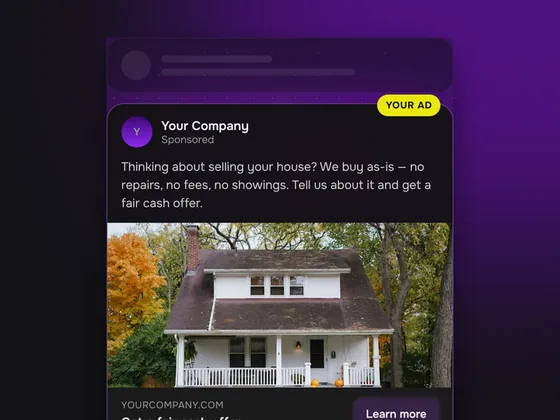
Meta ads fit operators who want steady volume and can follow up for weeks, because Facebook reaches sellers before they start searching. That reach is also the catch: you get more early-stage sellers and need more inquiries per contract.
A Hesel coach put the difference simply on a client success call: with Facebook you find the sellers; with Google, they find you. Generic "we buy houses, any condition" ads attract curious homeowners. Ads built around one seller situation your team can actually solve attract better ones. More on structure in our Facebook ads for investors service.
Google PPC: intent, if you can answer fast
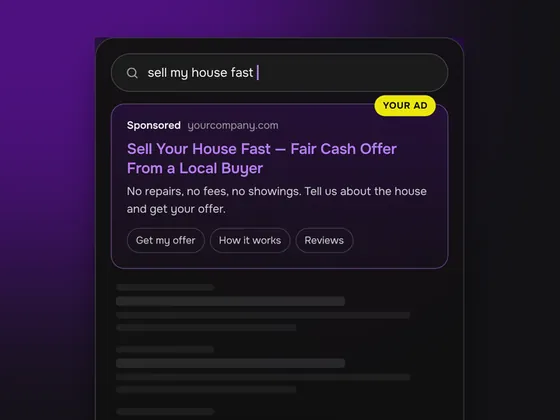
Google PPC fits operators who can answer an inquiry within minutes, because the seller searching "sell my house fast" is often filling out several forms at once. You pay more per inquiry and should expect fewer inquiries per contract.
Esteban's public rule of thumb is about $5,000 a month for Google in a local market, versus $100 to $150 a day to start on Facebook. Below that, Google rarely gets enough data to learn. Our Google Ads service for investors is built around that speed requirement.
SEO, website and Google Business Profile: the asset you own
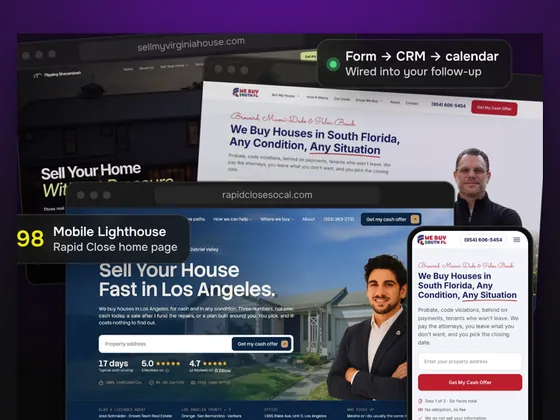
SEO fits operators with six to twelve months of runway who want inquiries that do not stop when the ad budget does. A strong site and Google Business Profile also make every paid channel convert better, because sellers check you before they call back.
Carrot's Trevor Mauch said on our channel that about one in ten organic SEO inquiries turns into a deal in Carrot's data.
In one Hesel client's case, a $35,000 deal in Charlotte came after about three months of Google Business Profile, SEO and website work. That was one of our best results, not a typical one. Outcomes depend on market, budget, offer and follow-up speed. See our SEO and AI search service.
Disclosure: Hesel has a partnership with Carrot, and Hesel clients get a Carrot website through it.
YouTube: trust that makes the other channels work
YouTube fits operators who want sellers to trust them before the first call, and it works best paired with search or Meta rather than alone. Video ads also retarget sellers who visited your site and did not fill out the form.
Some operators send sellers a short video before the appointment so the seller knows who is coming. One client of ours sends a short YouTube interview to sellers before the appointment. One seller watched seven minutes of it and told him he was going with them. Our guide to YouTube ads for real estate investors covers the setup.
Direct mail: still works, still slow
Direct mail fits operators with a defined list (absentee owners, high equity, older owners) and patience for a weeks-long lag between drop and contract. It is inbound in the sense that the seller calls you, but it shares the same data sources as cold callers.
Postage is only the start: USPS lists Every Door Direct Mail flats at about $0.26 per piece, before printing, data and design. In popular investor zip codes, your postcard lands in a stack of other buyers' postcards. If you mail, test one message against one list and count contracts, not calls.
Referrals and JV: the cheapest deals you cannot schedule
Referrals fit every operator as a layer, never as the plan, because they are high-trust and cheap but arrive when they arrive. Build them on purpose: agents with listings that will not sell, wholesalers with inquiries they cannot close, and past sellers asked for a referral after closing.
Put fee splits in writing, and check your state rules before paying anyone who is not licensed. Some states treat paid referrals as brokerage activity.
The part every channel shares: speed and follow-up
Every inbound channel depends on calling the seller back within minutes and following up for weeks, because the seller who filled out your form often filled out others. Inbound without speed is just a more expensive cold call.
One Hesel client in California, Dawson, signed a seller who had submitted forms to four companies on a Saturday night. He was the only one who called her over the weekend. Our ISA standard is a first call attempt within 2 minutes, 5 at most. Our speed to lead guide covers the benchmarks.
The first call also has to qualify, not just connect. Our list of questions to ask motivated sellers is the order our ISAs use on inbound seller calls.
Which channel should you start with?
Start with the channel that matches your budget, your follow-up capacity, and how long you can wait for the first check. Use these rules as a starting point:
- You can answer every inquiry in under five minutes and can spend about $5,000 a month: start with Google PPC.
- You have $3,000 to $5,000 a month and a team that will follow up for weeks: start with Meta.
- You have six to twelve months of runway: start SEO and your Google Business Profile now, next to paid.
- Your best sellers are older, rural or high-equity owners: keep a direct mail layer and measure it on contracts.
- Always: build referral and JV relationships, and never count on them.
Add channels in order, not all at once. Esteban's rule from the same training: "don't start a second marketing channel until you're spending at least 20K on one channel." If Facebook hits diminishing returns early in a small market, add Google PPC next to it.
He also sets a scale threshold by channel: keep scaling cold calling while it returns 4x or more on spend, direct mail at 3.5x or more, and PPC at 3x or more.
Give any new channel one full cash cycle before you judge it. Experienced buyers give a vendor a full quarter and treat the first 30 days as data.
One sophisticated buyer told us how he tests vendors: "I gave them all a quarter... the first 30 days is just getting data." Switching from Google to Facebook after three weeks resets the learning on both.
How Hesel runs inbound for investors
Hesel runs Meta, Google, YouTube and SEO campaigns for real estate investors and pairs them with ISA follow-up, with a first-call standard of 2 minutes, 5 at most, and a qualified handoff. Our standard is to optimize ad accounts toward appointments and contracts, not form fills.
We set up client accounts to send positive CRM pipeline stages (qualified, appointment set, offer made, under contract) back to Meta through the Conversions API and to Google as offline conversions.
Optimizing on outcomes instead of form fills is the difference between channels that get cheaper over time and channels that just get busier. Read how the follow-up side works on our conversion and appointment-setting page.
Build a pipeline that does not depend on dialing
If your callers are burning out and your contracts are flat, the fix is rarely more dials. It is a channel where sellers come to you, plus a team that answers first.
On a strategy call we look at your market, your budget and your follow-up capacity, then tell you which channel to start with and what cost per contract to expect. If the math does not work in your market, we will tell you on the call.
Book a free strategy call and bring your last 90 days of numbers by channel.
Frequently asked questions
How do I get real estate deals without cold calling?
You get real estate deals without cold calling by running inbound channels where sellers contact you first: Google PPC, Meta ads, SEO, YouTube, direct mail and referrals. Then call every inquiry within minutes, qualify it, and follow up for weeks. Judge each channel on cost per signed contract.
Is cold calling dead for real estate investors?
Cold calling is not dead for real estate investors, but it is harder. Shared lists, spam labels and Do Not Call rules raise the cost per contract. Many operators keep a small outbound team and move most of their budget to inbound channels where the seller asks to be contacted.
What is the best inbound channel for motivated sellers?
The best inbound channel for motivated sellers depends on your budget and follow-up speed. Google PPC brings the highest intent and fastest contracts if you answer in minutes. Meta brings more volume at lower cost per inquiry. SEO compounds over months and lowers your cost over time.
How much does a contract from Facebook ads cost?
What a signed contract from Facebook ads costs depends on your market, your offer and how fast your team calls and follows up, so there is no honest single number. Track it as ad spend divided by signed contracts, judged over 60 to 90 days, because many Facebook contracts sign weeks after the inquiry.
Is Google PPC worth it for wholesalers?
Google PPC is worth it for wholesalers who can answer inquiries within minutes and spend around $5,000 a month in a local market. Sellers searching are ready to act, so contracts often sign faster than from social ads. Without fast follow-up, the expensive clicks go to competitors.
How long does SEO take for real estate investors?
SEO for real estate investors usually takes three to twelve months to gain real traction, according to Carrot's CEO. A complete Google Business Profile, real reviews and a fast site help sooner, and they also raise conversion on paid channels while organic rankings build.
Does direct mail still work for motivated sellers?
Direct mail still works for motivated sellers on the right list, especially older, high-equity or absentee owners. It is slow and shares data sources with cold callers, so mailboxes are crowded. Test one message per list and measure it on contracts, not on calls received.
How fast should I call back an inbound seller?
Call back an inbound seller within two minutes when you can, and never later than five. Sellers often submit several forms at once, and the first competent conversation usually wins. Cover nights and weekends, and keep following up for weeks if the seller does not answer.
Sources
- Baylor University Keller Center: Has Cold Calling Gone Cold? (2012)
- Federal Trade Commission: Complying with the Telemarketing Sales Rule
- USPS: Every Door Direct Mail pricing
- Esteban Andrade on YouTube: tracking signed contracts back to each channel
- Esteban Andrade on YouTube: client funnel breakdowns and starting budgets
- Trevor Mauch (Carrot) on YouTube: SEO timelines and organic conversion
- Brandy Pollock on YouTube: Google PPC cost per inquiry and scaling
- Hesel Media Agency TV: Dawson's success call on Google vs Facebook sellers
- Esteban Andrade: when to add a second channel, scale thresholds and maximum cost per appointment (YouTube, November 2025)