





15 min read · November 1, 2026
Real Estate Cold Calling: When It Pencils Out and What a Contract Costs
 By Esteban AndradeFounder of Hesel Media
Cold calling is not dead. It is just more expensive than the dialer invoice says. If you cannot name what one signed contract from your phones costs, you do not know if the channel works. You only know it is busy.
Key points
- Real estate cold calling is when an investor's callers phone property owners who never asked to hear from them, using pulled lists, to find the few who will sell now or soon.
- It pencils out when a calling seat's fully loaded monthly cost, divided by the contracts it produces, beats your inbound cost per contract.
- Contact rate and list freshness swing the math far more than caller wages do. The same seat can cost about $1,420 or about $16,670 per contract.
- Federal rules (TCPA, the FCC's rules and the FTC's Telemarketing Sales Rule) set calling hours, Do Not Call scrubbing and consent. Some states are stricter. Get an attorney to review your setup.
- Calling works best as one input into the same qualification and follow-up system as your inbound seller inquiries.
What real estate cold calling means for an investor
For an investor, real estate cold calling means dialing owners from a list to find people willing to sell a property below retail, then handing the interested ones to acquisitions. It is not agent prospecting. You are not asking for a listing. You are looking for a problem you can solve with cash, terms or a novation.
The lists are the usual suspects: absentee owners, vacant properties, inherited and probate houses, pre-foreclosures, tax delinquent owners and tired landlords. You pull them from a data provider, skip trace them for phone numbers, scrub them and load them into a dialer. If you want the words your callers should use, our cold calling scripts for investors cover each list type.
The output that matters is not dials, and it is not "leads". It is a qualified seller conversation that turns into an appointment, an offer and a signed contract.
When cold calling pencils out vs inbound
Cold calling pencils out when one seat's all-in monthly cost, divided by the contracts it produces, comes in at or below what your inbound channels cost per contract, and your team can work both without slowing either. If you can't measure both in the same CRM, you are guessing.
It tends to work when these are true:
- Someone has capacity to work the conversations. Callers create interested sellers. A lead manager or acquisitions rep has to call them back the same day.
- Your market has deep owner data that isn't burned out. One land and house wholesaler told us on a sales call: "We're all pulling data from the same exact place... people are getting pummeled."
- Inbound volume is capped. Small or rural markets can run out of search demand. Phones can add conversations ads can't buy.
- You can wait. A new calling program needs list testing, script work and caller ramp before its numbers mean anything. In his ranking of 19 seller channels, Esteban estimates the cash conversion cycle of a new cold-calling campaign at 6 to 9 months from launch (May 2025 video), shorter once the team and system have reps.
- You will run it legally. Scrubbing, calling hours and opt-outs are not optional overhead. They are part of the seat cost.
It tends to fail when the owner is the only person who can qualify, when callers are judged by "leads" instead of contracts, or when nobody can say how many records were actually dialed.
| Channel | Who raised a hand | What you pay for | Biggest cost driver | Typical failure | Compliance load |
|---|---|---|---|---|---|
| Cold calling | Nobody. You find them. | Caller hours, dialer, data, skip tracing, management | Contact rate and list freshness | Busy callers, few contracts, no dial transparency | Highest: DNC scrubbing, calling hours, opt-outs, dialer rules |
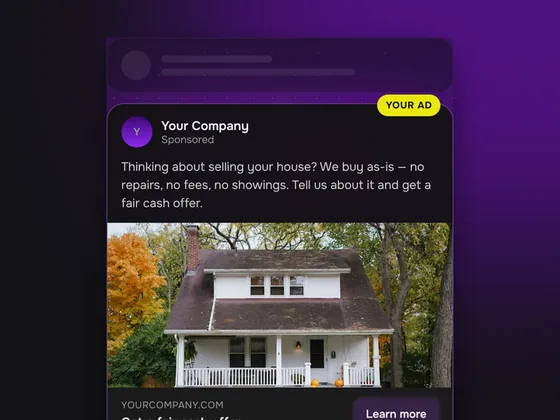
| Meta (Facebook) ads | Seller filled out your form | Ad spend, creative, follow-up labor | Offer and follow-up speed | Curious homeowners from generic "we buy houses" ads | Ad policy, SMS consent on forms |
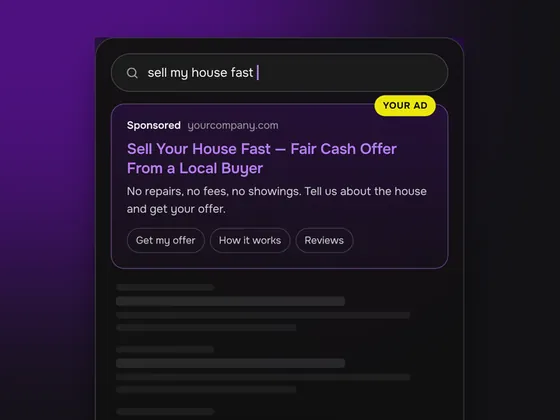
| Google PPC | Seller searched and clicked | Clicks, landing pages, follow-up labor | Cost per click in your market | Small budgets that never exit testing | Ad policy, SMS consent on forms |
| Pay per lead vendor | Seller filled out someone's form | Each delivered lead | How many buyers get the same seller | Shared leads, sellers already called by others | Depends on the vendor's consent capture |
The cost-per-contract math for one calling seat
One calling seat costs labor plus dialer plus data plus skip tracing plus management time, and the only honest way to judge it is that total divided by signed contracts. Here are the inputs, with tool prices taken from vendor pages as of November 2026.
- Caller labor: offshore calling vendors publish rates from $5 an hour at GetCallers and $7 an hour at Hit Rate Solutions. GetCallers' own estimator prices one 40-hour seat at $866 a month and puts an in-house caller at "$4,000+" a month before taxes and dialer.
- Dialer: BatchDialer lists $95 per agent a month (Starter) and $151 (Pro, five lines) billed annually. Mojo lists a triple-line dialer at $139 a month plus a $10 agent license.
- Data and skip tracing: PropStream Essentials is $99 a month, with skip tracing at 12 cents a contact.
- Do Not Call access: the first five area codes are free. After that it is $85 per area code a year, capped at $23,425, for the FTC fee year that began October 1, 2026.
- Management: someone has to review calls, coach and fix scripts. Price that time. Nobody's hour is free.
Now the worked example. These are example inputs, not benchmarks: one offshore seat at $866, BatchDialer Pro at $151, PropStream Essentials at $99, 2,500 skip traced records at $300, and 20 hours of manager time at $30 an hour ($600). That is $2,016 a month. Assume 8,400 dials a month: five productive hours a day, 80 dials an hour, 21 days.
Example only. Plug in your own rates. Tool prices as of November 2026.
| Scenario (8,400 dials, $2,016 seat) | Contact rate | Conversations that become interested sellers | Interested sellers who book | Appointments that sign | Contracts a month | Cost per contract |
|---|---|---|---|---|---|---|
| Fresh stacked list, same-day handoff | 9% | 2.5% | 50% | 15% | About 1.4 | About $1,420 |
| Typical list, next-day callback | 6% | 2% | 40% | 12% | About 0.5 | About $4,170 |
| Stale list, slow follow-up | 4% | 1.5% | 30% | 8% | About 0.12 (one every 8 months) | About $16,670 |
Same seat. Same wage. A 12x swing in cost per contract. That is why arguing about $5 versus $8 an hour misses the point. The levers are list quality, contact rate and how fast an interested seller gets a real conversation with someone who can make an offer.
The formula, if you want it on one line: cost per contract = monthly seat cost ÷ (dials × contact rate × interest rate × booking rate × signing rate).
Compare apples to apples
Most operators compare a fully loaded caller against ad spend only. That flatters ads. Add your follow-up labor to the inbound side, or strip labor out of the calling seat, before you decide which channel wins.
Team and dialer setup that holds up
A calling program that lasts has three roles: callers who find conversations, a lead manager who qualifies and books, and an acquisitions rep who makes offers. When one VA does all three, the program stalls. Callers are paid to dial. Nobody is paid to follow up.
Size the lead manager to the callers, not the other way around. If two seats produce 20 interested sellers a week, someone needs the hours to reach all 20 the same day, then keep following up for weeks.
If you are deciding between in-house and outsourced seats, our guide to virtual assistant cold calling for real estate breaks down cost, training and QA. For a vendor example, see our review of CallGeeks' cold calling services.
Dialers come in three flavors: single-line (one call at a time), multi-line (several lines ring at once and the first live answer connects) and predictive (software paces calls to agent availability). More lines means more conversations per hour. It also means more dropped calls. The FCC caps abandoned calls at 3% of live-answered telemarketing calls and requires a connection within two seconds of the person's greeting.
Caller ID reputation is the other dialer problem. One investor who owns about 15 rentals told us cold calls to his own phone "almost always say spam likely."
BatchDialer's page says it monitors numbers across "10+ reputation databases" and auto-replaces flagged numbers on Pro. Swapping numbers does not fix why they got flagged. Dial volume per number, robotic openers and ignored opt-outs do. Our comparison of the best dialers for real estate investors goes deeper on features.
Building a bigger team? Our interview on how one founder built a remote call center for real estate deals covers sourcing, training and process, and Scott Morse's cold calling strategies cover the fronter and closer split.
List quality and contact rate decide the channel
Contact rate is the number that makes or breaks cold calling, and it depends more on list freshness and list stacking than on the person dialing. A great caller on a dead list loses to an average caller on a fresh one.
One investor told us his cold-call contact rate runs about 8% to 9%.
For a working range, the cold-calling scorecard Esteban teaches on his channel uses a 6% to 12% connection rate, list dependent, and 10 to 15 connects per hour with the dialer running (November 2025). His budget rule from the same session: keep scaling cold calling only while it returns 4x or more on what you spend. Treat both as rules of thumb to test, not benchmarks.
- Stack your lists. An owner who shows up as absentee, tax delinquent and vacant is a better first dial than one who shows up once.
- Re-skip the misses. Wrong numbers are the usual reason calls go unanswered, and they cost you a second trace. Track wrong numbers by list and by skip trace source.
- Work every list more than once. One pass is not a campaign. Owners who say "not now" in March sometimes say "call me" in July.
- Measure per caller, per list. Dials, right-party contacts, conversations over a minute, interested sellers, appointments, contracts. If you cannot see dials per record, you cannot tell a bad list from a bad caller.
Compliance: TCPA, Do Not Call, state rules and calling hours
Cold calling homeowners puts you inside federal telemarketing rules (the TCPA and FCC rules, plus the FTC's Telemarketing Sales Rule) and state laws, and penalties are per call. Have a telecom attorney review your setup before the first dial. This section is a checklist, not legal advice.
- Calling hours: the FCC bars telephone solicitations to homes before 8 a.m. or after 9 p.m., local time where the person is (47 CFR 64.1200). Florida is tighter: no calls before 8 a.m. or after 8 p.m., and no more than three calls in 24 hours on the same subject (Fla. Stat. 501.616).
- National Do Not Call Registry: the FTC says you must sync your lists with the registry every 31 days (FTC Telemarketing Sales Rule guide). Access fees for the current year are in the FTC's fiscal 2027 fee notice.
- Your own do-not-call list: when someone says "don't call me," the FCC rule says honor it within a reasonable time, no more than 10 business days. Make it a one-click disposition in your dialer.
- Autodialers, prerecorded messages and texts: autodialed or prerecorded telemarketing calls to cell phones need the person's prior express written consent under the FCC rule. Do not text a cold list.
- AI callers: Jordan Fleming, founder of smrtPhone, which sells AI calling agents, told a July 2026 Office Hours session on Esteban's channel that "outbound carries compliance risk" and that cold calling with AI is not legally allowed right now. His advice if a vendor offers AI cold-calling agents: "hang up." Keep AI agents on opted-in inquiries.
- State lists and laws: Florida keeps its own no-sales-solicitation list and lets people sue for $500 or actual damages per violation (Fla. Stat. 501.059). Check every state you call into.
- Federal damages: the TCPA lets people sue for $500 per violation, and a court can triple it for willful or knowing violations (47 U.S.C. 227).
- Recording: some states require every party's consent to record. Ask your attorney which ones you call into.
One gray area belongs with your attorney, not a blog. The FCC defines a telephone solicitation as a call encouraging "the purchase or rental of, or investment in, property, goods, or services," and the FTC frames telemarketing around getting consumers to buy. A call offering to buy a house does not fit either neatly.
Run your program as if every rule applies anyway. The downside is counted per call. The FCC's telemarketing overview is a good starting point for that conversation.
Mistakes that sink cold-calling programs
The same failure patterns come up on Hesel sales calls again and again: nobody can see the dials, callers blame the list, lists get one pass, and conversations die without follow-up.
One investor paid a VA calling service $1,400 a month and got 37 leads from 20,000 to 30,000 records, with zero deals and no report of how many records were dialed.
Another investor tracked a full year with a cold-calling service: 97 leads, 53 qualified, 22 appointments, 14 met, 7 offers, 1 contract.
- Judging callers by "leads". A lead is a caller's opinion. Pay attention to appointments held and contracts signed.
- No dial transparency. If your vendor or VA cannot show dials per record and recordings, you are buying a feeling.
- Blaming the list. One client's offshore caller blamed the data, the list and the comps, and had called each list only once. Bad lists exist. So do bad processes.
- Burning interested sellers. An interested seller who waits two days for a callback is a cold call again.
- Skipping compliance to save money. The scrub fee is the cheapest line in the budget.
How Hesel fits next to a calling team
Hesel Media does not run cold-calling programs. We run inbound motivated seller campaigns on Meta, Google and YouTube, and our ISAs call new seller inquiries, qualify them and book them with your acquisitions team.
Hesel's ISA standard is a first call within 5 minutes of a new seller inquiry; later than that counts as late.
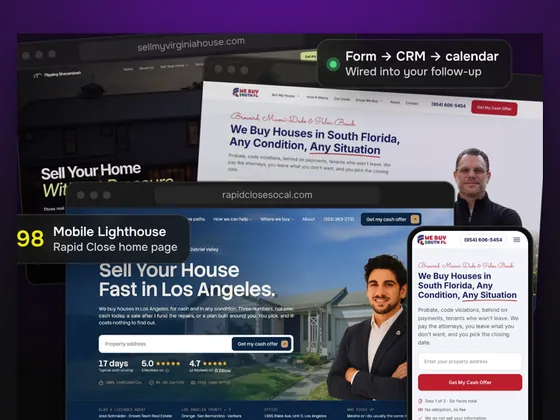
Plenty of operators keep a calling team and add inbound. What works is one CRM where cold-call conversations and inbound inquiries go through the same qualification (motivation, timeline, condition, price), the same follow-up and appointment setting, and the same cost-per-contract report. Then you move budget to whatever produces contracts, not activity.
One public example of what that report looks like: a Hesel client's Facebook campaign ran about $1,571 per signed contract (about $11,000 in spend, seven contracts), as Esteban walked through on his channel. That was one of our best results, not a typical one. Outcomes depend on market, budget, offer and follow-up speed.
Put your phones and your ads on one scorecard
If your callers are busy and your pipeline is not, the problem is usually not effort. It is that nobody has priced a contract from each channel the same way.
On a strategy call we will run your calling seat through the cost-per-contract math above, compare it to what inbound would cost in your market, and tell you straight if the numbers don't work. Some markets are better served by phones. We will say so.
Book a free strategy call and bring your last 90 days of dials, conversations and contracts.
Frequently asked questions
What is cold calling in real estate?
Cold calling in real estate is phoning property owners who did not ask to be contacted. For investors, it means calling owners from lists such as absentee, vacant, probate or pre-foreclosure to find people willing to sell, then booking the interested ones with an acquisitions rep for an offer.
Does real estate cold calling still work for investors?
Real estate cold calling still works for investors when the list is fresh, contact rates hold up and interested sellers get fast follow-up. It fails when callers are judged by leads instead of contracts. Measure cost per contract for at least 90 days before you decide.
Is real estate cold calling legal?
Real estate cold calling is regulated, not banned. Federal rules cover calling hours, scrubbing against the National Do Not Call Registry every 31 days, honoring opt-outs and consent for autodialed or prerecorded calls to cell phones. State rules vary. Confirm your program with a telemarketing attorney.
What hours can you cold call homeowners?
Federal rules bar telephone solicitations before 8 a.m. or after 9 p.m. in the homeowner's local time. Some states are stricter. Florida, for example, limits calls to 8 a.m. through 8 p.m. and allows no more than three calls in 24 hours on the same subject.
How much does a real estate cold caller cost?
A real estate cold caller costs more than the hourly rate. Offshore vendors list from $5 to $7 an hour as of November 2026, but a working seat also needs a dialer, data, skip tracing, Do Not Call access and management time. Price the whole seat, then divide by contracts.
What is a good contact rate for real estate cold calling?
A good contact rate for real estate cold calling is whatever keeps your cost per contract below your inbound channels. Esteban's working range is a 6% to 12% connection rate, depending on the list. Track right-party contacts per dial by list and by caller. If rates fall, re-skip the misses and stack lists before hiring more callers.
Can I text the same list I cold call?
Texting a cold list carries more legal risk than calling it. FCC rules require prior express written consent for autodialed telemarketing to cell phones, and Florida's telemarketing law covers text messages as well as calls. Confirm with a telemarketing attorney before you start any texting program.
Should I cold call or run ads to find motivated sellers?
Choose between cold calling and ads by comparing cost per contract, with labor counted on both sides. Ads reach sellers who raised a hand, and calling reaches owners who didn't. Many operators run both, feeding one CRM and one follow-up system, and shift budget to whichever produces contracts.
Sources
- FCC rule 47 CFR 64.1200: calling hours, Do Not Call, consent and abandoned calls
- Telephone Consumer Protection Act, 47 U.S.C. 227
- FTC: Complying with the Telemarketing Sales Rule
- FTC: fiscal 2027 fees to access the National Do Not Call Registry
- FCC: Telemarketing and robocalls overview
- Florida Statutes 501.616: calling hours and call limits
- Florida Statutes 501.059: Florida do-not-call list and damages
- BatchDialer pricing page
- Mojo dialer pricing page
- PropStream pricing page
- GetCallers real estate calling services and estimator
- Hit Rate Solutions real estate cold calling services
- Esteban Andrade's Facebook ads breakdown with a client's cost per contract (YouTube)
- Esteban Andrade ranks 19 seller channels: cold calling and its cash conversion cycle (YouTube, May 2025, 20:19)
- Esteban Andrade's cold-calling KPIs and channel scaling rules (YouTube, November 2025, 47:12)
- smrtPhone founder Jordan Fleming on AI calling agents and compliance, Office Hours (YouTube, July 2026, 22:09)