







10 min read · November 1, 2026
Readymode Pricing: What a Dialer Seat Really Costs Your Acquisitions Team
 By Esteban AndradeFounder of Hesel Media
You are comparing $239 and $299 a seat. That is the wrong number to stare at. The setter in that seat costs more than four times the license, and the dial mode you pick decides both how many sellers you talk to and how much TCPA risk you carry.
Key points
- Readymode pricing is $239 per license a month for Starter Core and $299 per license a month for Readymode iQ, billed monthly, as of November 2026.
- iQ adds caller ID reputation tools, call cadencing, Autopilot and integrations (Salesforce, HighLevel, Pipedrive). The pricing page lists a 5-license minimum for iQ.
- In our worked example the license is only 16 to 19% of a setter seat. Judge the dialer on live seller conversations per paid hour.
- Multi-line dialing multiplies conversations, but federal rules cap abandoned calls at 3%. Readymode says compliance is on you.
- If most of your pipeline is inbound seller inquiries, speed to lead matters more than dial mode.
Is Readymode worth the price?
Readymode is worth it for an outbound team of three or more setters that runs multi-line dialing every day, and it is overpriced for a solo caller or an inbound-only shop. Its $239 Starter seat costs more than real estate dialers like BatchDialer, so it has to earn the gap in conversations per hour. iQ earns its extra $60 once flagged numbers start costing you answered calls.
For a sense of the price band: in a 2022 podcast on Esteban's channel, Gustavo Munoz, CEO of the ISA call center Power ISA, put a phone system like RingCentral under $100 a month and industrial dialers at $100 to $200 a month per person. Readymode's $239 to $299 sits above that 2022 band. Prices have moved since, but the premium is real.
The rest of this page shows the plan math, the line items the sticker price leaves out, and the compliance rules that limit how hard you can push a predictive dialer.
Readymode plans and prices (as of November 2026)
Readymode sells two plans, Starter Core at $239 and iQ at $299 per license per month, with set-up and number activation fees waived on both. Here is what each seat includes, pulled from Readymode's own pricing page, FAQ and Starter vs. iQ comparison.
| Line item | Starter Core | Readymode iQ |
|---|---|---|
| Price per license, billed monthly | $239 | $299 |
| Minimum licenses | 1 | 5 (pricing page) |
| Set-up and number activation fees | Waived | Waived |
| Phone numbers (DIDs) | Up to 30 per license | Up to 75 per license |
| Outbound minutes | Free, fair use policy | Free, fair use policy |
| Inbound minutes | $0.02 per minute | $0.02 per minute |
| Dial modes | Preview, power, progressive, predictive | Same |
| Built-in CRM | Yes | Yes |
| Caller ID reputation monitoring and remediation | No | Yes |
| Call cadencing and Autopilot | No | Yes |
| Integrations (Salesforce, HighLevel, Pipedrive) | No | Unlimited |
| Voicemail drop | No | Qualifying customers only, per-drop fee not published |
| Implementation and training | Included at 3+ licenses | Included at 3+ licenses |
| Contract | Monthly, no contract | Monthly, no contract |
Prices as of November 2026, in USD, from Readymode's pricing page, FAQ and plan comparison page. Annual billing is available through Readymode sales; annual rates are not published on the pricing page.
One conflict to settle before you sign: the pricing page lists a 5-license minimum for iQ, while the comparison page calls five or more a recommendation. Get the minimum written into your quote.
What the Readymode price leaves out
The sticker price leaves out five costs you will pay anyway: inbound minutes, voicemail drops, the admin seat gap, the iQ floor, and your data. None is large alone. Together they decide whether your budget holds.
- Inbound minutes. Seller callbacks bill at $0.02 a minute. 2,000 callback minutes a month adds $40.
- Voicemail drops. Opt-in, consent based, and billed per drop at a price Readymode does not publish.
- The admin seat. You get one free admin license, but it lacks agent features like the web phone. An acquisitions manager who also dials needs a paid seat.
- The iQ floor. Five licenses at $299 is $1,495 a month before anyone dials.
- Your data. Lists, skip tracing and National Do Not Call Registry access sit outside the dialer. The FTC's registry FAQ lists the first five area codes free, then $85 per area code a year, capped at $23,425, starting October 1, 2026.
Coverage is the continental US, Hawaii and Canada, billed in USD by card. If you buy in other markets, look elsewhere.
The real cost: price per live seller conversation
The number that matters is cost per live seller conversation: total seat cost divided by the conversations that seat produces. Here is a worked example. Every input below is an assumption, so swap in your own payroll and dialer reports.
- Setter cost: $10 an hour, all in.
- Dialing time: 6 hours a day, 21 days, so 126 paid hours a month.
- Contact rate: 8% of dials reach a live person. Skip-traced lists vary a lot. One investor on a Hesel sales call put his cold-call contact rate at 8% to 9%.
- Dial speed: 70 dials an hour in power mode (one line), 150 in multi-line mode.
Seat cost on Starter is $1,260 in labor plus $239, or $1,499 a month. On iQ it is $1,559. The license is 16% of the seat on Starter and 19% on iQ. That is why the license price is the wrong fight.
In power mode, 70 dials an hour at 8% is 5.6 conversations an hour, or about 706 a month. That is $2.12 per conversation on Starter. In multi-line mode, 150 dials at 8% is 12 an hour, or 1,512 a month. That drops to $0.99 per conversation on Starter and $1.03 on iQ.
When iQ pays for itself
iQ pays for itself when its reputation tools add about 4% more live conversations per seat. At $0.99 a conversation, the extra $60 needs 61 more conversations a month (1,573 instead of 1,512). If carriers are labeling your numbers as spam, that is a low bar. If your numbers are clean, Starter wins, and the 5-seat floor decides the rest.
From conversation to contract
Cost per contract equals cost per conversation, times conversations per appointment, times appointments per contract. Say your team books one appointment per 50 conversations and signs one contract per 6 appointments. A $0.99 conversation becomes about $297 of setter seat per contract. In power mode it is $636.
Same license, more than double the seat cost per contract. Dial mode moves your cost per contract far more than the gap between $239 and $299. Data, skip tracing and your acquisitions rep come on top.
Predictive vs. power dialing: the compliance side of the price
Multi-line dialing is where the extra conversations come from and where the legal risk lives, because federal rules cap abandoned telemarketing calls at 3% of calls answered by a live person, measured per campaign over 30 days. That cap is written into 47 CFR 64.1200.
Under the same rule, a call counts as abandoned if a live rep is not on the line within two seconds of the person's greeting. Unanswered calls must ring at least 15 seconds or four rings. When no rep is free, the system must play a short prerecorded identification and opt-out message.
Readymode's FAQ says preview and power modes run one line per agent, while progressive and predictive run many lines at once. It lists internal DNC lists, state calling restrictions, compliant call recording, and integrations with Contact Center Compliance and The Blacklist Alliance. It also says the customer alone is responsible for following the rules.
The settings your team must get right on any dialer:
- National DNC scrub: sync your lists with the registry at least every 31 days, per the FTC.
- Internal DNC: honor stop requests within 10 business days and keep them for 5 years.
- Calling hours: no solicitation calls before 8 a.m. or after 9 p.m. in the called person's time zone.
- Cell phones: autodialed or prerecorded calls need prior express consent, and prior express written consent when the call is telemarketing.
- Voicemail drops: the FCC ruled in 2022 that ringless voicemail is a call that needs consent.
- Stakes: the FTC lists fines of up to $53,088 per violation.
Is an offer to buy a house a "telephone solicitation"? The rule defines it as a call to encourage the purchase or rental of, or investment in, property, goods or services. Investors argue it both ways. Do not build your compliance program on that argument. Whether your setup counts as an autodialer is a legal question too.
Rules summarized as of November 2026. This is general information, not legal advice. Have a TCPA attorney approve your consent language, call and text cadence, and scripts.
Number reputation is the other half. Carriers sign and verify caller ID under the FCC's STIR/SHAKEN framework, and spam labels kill answer rates. That is the problem iQ's monitoring, remediation and Autopilot target.
Readymode reviews: what users report
Readymode scores 4.6 out of 5 on both G2 (268 reviews) and Capterra (145 reviews), with a 4.5 value-for-money score on Capterra, as of November 2026.
On Capterra, reviewers in acquisitions and CEO roles call it strong value for outbound teams. One director of sales at a 50+ person team reported waiting days for support answers, even though Starter advertises unlimited free support. Capterra lists no free version and no free trial.
Who Readymode fits, and who should skip it
Readymode fits an outbound acquisitions floor that dials skip-traced lists every day and has the volume to use multiple lines. It does not fit small or inbound-led teams.
Good fit:
- Three or more setters on cold lists (you also get free implementation and training at 3+ licenses).
- Teams of five or more whose numbers keep getting flagged, where iQ's reputation tools earn the $60.
- HighLevel shops that want dial data synced to the CRM (iQ only).
Skip it if:
- You have one or two callers. A cheaper multi-line seat does the same job.
- You call outside the US, Hawaii and Canada.
- You cannot fund a slow start. Esteban's rule of thumb in his May 2025 video ranking 19 ways to find motivated sellers is a 6 to 9 month cash cycle for a new cold calling program, so budget two to three quarters of seats before you judge the dialer.
- Most of your contracts start as inbound ad inquiries. You need instant routing and a tight attempt cadence, not 20 lines per agent.
Inbound vs. outbound: where a dialer stops helping
A dialer solves an outbound volume problem. It does not solve a speed problem on sellers who already raised their hand. Those sellers are rarely talking only to you.
A 17-year Miami wholesaler told us on an April 2026 sales call: "The minute someone sends me a lead and they respond that I am the third or fourth person calling them and after that they don't want to answer the phone."
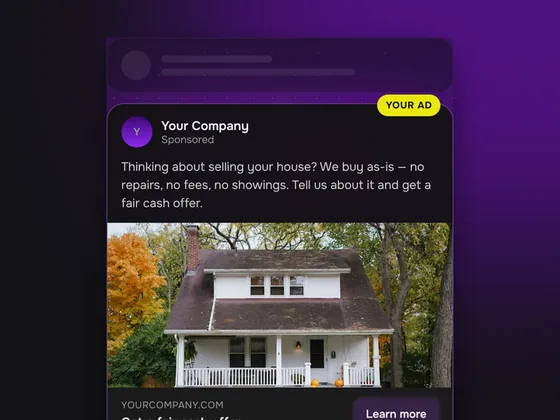
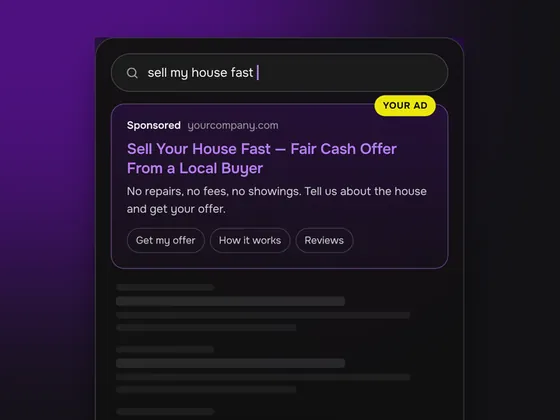
That is the model Hesel runs. Hesel builds Meta and Google motivated seller campaigns, and its ISAs call and qualify the new seller inquiries and book appointments on your team's calendar. Read how the conversion and appointment setting service works.
Our ISAs work new inquiries inside GoHighLevel, where calls, texts and iMessage (through Linq) sit on one contact record. We also set up the CRM to send deal stages back to Meta and Google as offline conversions, so campaigns optimize toward booked appointments and contracts, not form fills.
Here is what speed looks like inside one investor account we reviewed (mostly purchased third-party inquiries, not Hesel campaign results): 61% of new seller inquiries got a first call within 5 minutes, and 22% got no logged call within 7 days (n = 222 inquiries, May to June and October 2026).
The same account shows how fast that slips. In May and June 2026, 70.5% of inquiries were called within 5 minutes. In October 2026 it was 26.1%. Speed is a staffing and routing number, not a software feature. Track it weekly.
On dials to that account's seller inquiries, 17.6% of dials lasted 60 seconds or more, a rough proxy for a live conversation (n = 704 dials). Compare that to the 8% cold-list assumption in the seat math above.
A simple rule: if most of your contracts start inbound, buy the dialer last. Fix routing and first-hour attempts first.
Readymode alternatives
The main alternatives are a cheaper real estate dialer, an outsourced calling team, or inbound appointment setting. One line each:
- BatchDialer: multi-line dialer built around real estate data tools, listed from $95 per agent a month on annual billing. See our BatchDialer pricing breakdown.
- The full field: our ranking of the best dialers for real estate investors scores each tool on the same criteria.
- Outsourced callers: see our CallGeeks review before you staff your own floor.
- Your own floor: what it takes to build a remote call center for real estate deals, plus the cold calling playbook from Scott Morse.
- CRM first: if your dialer has to sync with Podio, read our Podio alternatives guide and our pick of the best CRM for wholesaling.
Stop paying for dials. Pay for booked appointments.
A dialer turns payroll into dials. Your business runs on conversations that become appointments, offers and contracts. If your team is buying seats to chase cold lists while your inbound inquiries wait, the math is upside down.
Hesel builds motivated seller campaigns on Meta and Google and puts trained ISAs on the new inquiries, so your acquisitions team walks into booked appointments. If the numbers work in your market, we will show you on a call.
Book a free strategy call and bring last month's dialer report.
Frequently asked questions
How much does Readymode cost per month?
Readymode costs $239 per license per month for Starter Core and $299 per license per month for Readymode iQ, billed monthly, as of November 2026. Set-up and number activation fees are waived. Outbound minutes are free under a fair use policy, and inbound minutes cost $0.02 per minute.
Does Readymode require a contract?
Readymode does not require a contract on its standard plans. Its FAQ says plans bill monthly with no contract, and annual billing is available by contacting sales. Annual rates are not published on the pricing page, so get the term, renewal and cancellation rules in writing.
Is Readymode a CRM?
Readymode is a dialer with a built-in CRM on every plan. Readymode iQ also integrates with Salesforce, HighLevel and Pipedrive. If you run a separate CRM for deal stages, dispo and follow-up, plan that sync before you buy, because Starter has no integrations.
What is the minimum number of licenses for Readymode iQ?
The minimum for Readymode iQ is 5 licenses on Readymode's pricing page, which sets a floor of $1,495 a month. Its Starter vs. iQ comparison page calls five or more a recommendation instead. Confirm the minimum on your written quote.
Does Readymode offer a free trial?
Readymode does not publish a free trial. Capterra lists no free trial or free version. Readymode's FAQ says custom pricing, special offers and free trials are available through its sales team, so ask for one before you commit seats.
Is Readymode TCPA compliant?
Readymode gives you compliance tools, such as internal DNC lists, state calling restrictions and compliant call recording, but its FAQ says the customer alone is responsible for following the rules. No dialer makes you compliant. Your consent language, scrubs, dial mode and abandonment rate do. Have a TCPA attorney review your setup.
Is Readymode cheaper than BatchDialer?
Readymode is not cheaper than BatchDialer on seat price. BatchDialer lists $95 to $199 per agent a month on annual billing, while Readymode lists $239 to $299 per license billed monthly, as of November 2026. Compare cost per live conversation, which depends on dial mode and contact rate.
Sources
- Readymode pricing and plans
- Readymode FAQ: features, pricing and requirements
- Readymode Starter vs. Readymode iQ comparison
- Capterra: Readymode pricing and reviews
- G2: Readymode reviews
- 47 CFR 64.1200: FCC telemarketing and abandoned call rules (Cornell LII)
- FTC: Q&A for telemarketers about the Do Not Call provisions of the TSR
- FCC: Telemarketing and robocalls (TCPA rules)
- Federal Register: FCC ruling that ringless voicemail requires consent (FCC 22-85)
- FCC: Caller ID authentication and STIR/SHAKEN
- BatchDialer pricing
- Esteban Andrade on YouTube: Power ISA's Gustavo Munoz on dialer price tiers (2022)
- Esteban Andrade on YouTube: cash cycle of a new cold calling program (May 2025)